Three Spines and a Stranger: The Sixty-Second Library Lottery
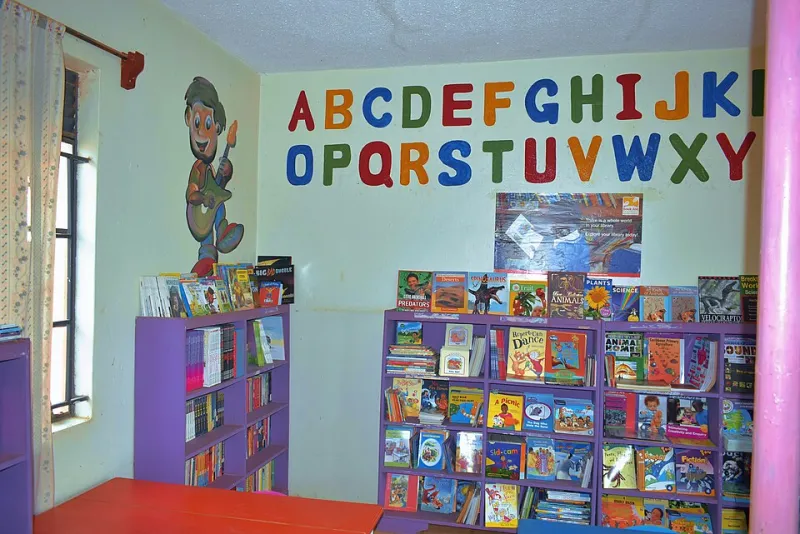
Photo: Fiktube, CC BY-SA 4.0, via Wikimedia Commons
It's half four on a wet November afternoon. The light has packed up for the day, your shoes are squelching gently, and you're standing in the crime section of your local library with absolutely no plan. Congratulations — you're about to be a writer for sixty seconds.
The rules of the library lottery are almost embarrassingly simple. You don't need a notebook, a laptop, or any talent whatsoever. You need three book spines, one stranger, and a clock. That's it. The library has already done the hard work of gathering thousands of possible stories onto shelves; all you're doing is bumping three of them into each other and seeing what falls out.
The Rules, in Four Small Moves
One: pick three spines from three different sections. Not three crime novels, not a neat little trio of gardening books. Different parts of the building. The whole point is the collision — a detective inspector meeting a seed catalogue meeting a local history pamphlet.
Two: read only the spines. No flicking through, no reading blurbs. You're working from titles, colours, and whatever tiny print the publisher squeezed onto the edge. This keeps things fast and stops you getting distracted by the actual contents, which is a real risk in a library.
Three: find one stranger. Not someone to talk to — this isn't that kind of game. Just a person you can see from where you're standing. The man in the anorak reading the racing pages. The toddler who has systematically removed every board book from the bottom shelf. The librarian with the lanyard and the expression of someone who has seen things. They become a character. Nothing more is required of them, and they'll never know.
Four: sixty seconds, out loud or on paper. Set a timer on your phone. Build a story that contains all three spines and the stranger. It doesn't need a beginning, middle and end. It needs to exist by the time the beep goes off. If you get three sentences, brilliant. If you get one, also brilliant.
Why Three Spines Beat a Blank Page
A blank page asks you to invent everything, which is exhausting and slightly rude. Three spines ask you to invent only the join.
That's the trick of it. Your brain is far better at connecting than conjuring. Give it a detective, a compost heap and a stranger in a wet coat and it will start welding them together before you've even finished reading the titles. The constraint does the heavy lifting, and you get to sit back and watch your own imagination do something competent for once.
It's also gloriously random. Two people doing this in the same library on the same afternoon will come out with completely different stories, because they'll wander into different aisles and notice different strangers. There's no correct answer, which takes an enormous amount of pressure off.
Three Combinations, Ready to Borrow
If you'd rather not browse, here are three starting points built from the sort of books almost every UK library keeps in stock.
The allotment body. Crime fiction (the 823s) plus gardening (635) plus local history (942). Say you've got The Quiet Neighbour, Growing Your Own Veg and A History of the Town Docks. Suddenly you have a body under a marrow glut, a suspect with an alibi involving a prize-winning leek, and a town with a secret buried in the harbour wall. That's a whole novel and you've spent ninety seconds on it.
Poison at the post office. Cookery (641.5) plus crime plus travel (914.1). A bake-off judge, a suspicious tart, and a coach trip to the coast that nobody returns from in the same mood. Add the stranger from the returns queue and you've got your witness.
The brass band inheritance. Music (780) plus DIY (684) plus pets (636.8). A colliery band, a disputed will, a flat-pack wardrobe that hasn't been assembled properly, and a cat who has been left everything. Genuinely, that one writes itself.
The Stranger Does the Work
Here's the bit people underestimate. The spines give you plot furniture. The stranger gives you a face.
A real person, glimpsed for two seconds, comes with all the details you'd never invent: the way they hold a newspaper at arm's length, the carrier bag they've put down carefully by their feet, the fact that they've chosen the least comfortable chair in the building. Borrow one detail and build a whole human being around it. It's free, it's instant, and it's surprisingly accurate.
Just don't stare. A glance and a guess is the whole technique. The library has enough going on without you conducting research at close range.
Sixty Seconds, Actually Timed
The temptation is to give yourself "a minute" and quietly take four. Resist it. The shortness is the point — it's what stops the perfectionism creeping in and turning a game into homework.
And if sixty seconds feels generous, it isn't. Try narrating aloud while you walk from the crime section to the exit and you'll find out exactly how much story fits in a minute. Roughly one good twist, if you're lucky, or a decent opening line and a mysterious smell.
The Warmest Writers' Room in Town
There's a practical reason this game lives so comfortably in a library, and it isn't just the books. It's the radiator by the reference desk. It's the fact that councils up and down the country keep these buildings open as warm spaces through the winter, no purchase necessary, no expectation that you'll be anywhere else.
Writers' rooms, on the whole, cost money. This one is free, has a roof, a toilet, and a staff member who will let you sit there for an hour as long as you're quiet. It's also quietly chaotic in the best way — someone's phone going off, a toddler having a moment, the photocopier jamming in the corner. That's not a distraction. That's atmosphere, and you can steal it.
So next time the sky is doing that thing where it's not quite raining but somehow you're still wet, go in. Pick three spines. Clock a stranger. Start the timer.
Sixty seconds from now, you'll have a story and somewhere warm to have thought of it. That's a decent November afternoon by anyone's reckoning.