The Gravy Boat Knows Too Much: A Sixty-Second Roast Table Whodunnit
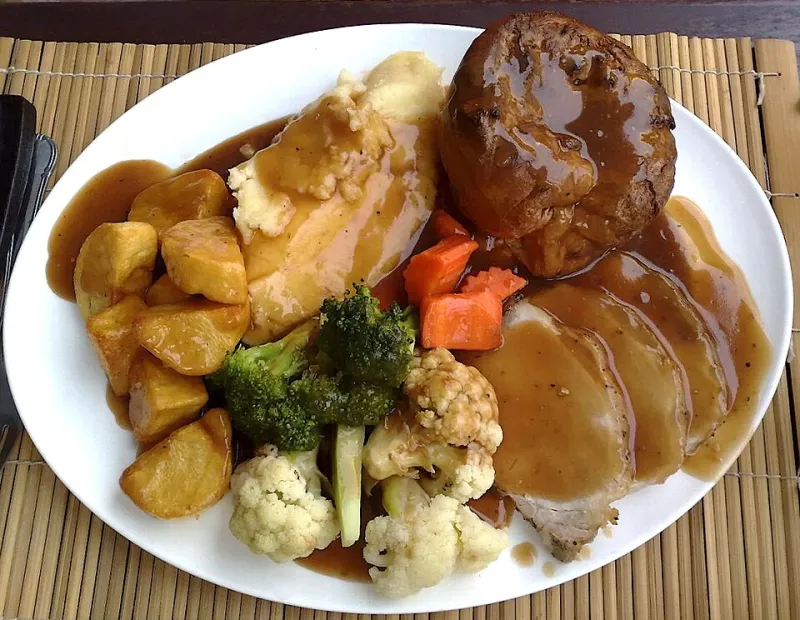
Photo: Jeff McNeill, CC BY-SA 2.0, via Wikimedia Commons
A Sunday roast is never just a meal. It is an ensemble production with a seating plan, unspoken rules and at least one person who insists the Yorkshire puddings are not just for beef. The table is already cast. You just have to notice.
This is a one-minute imagination game for the bit after lunch, when the plates are stacked and nobody wants to move. No props, no preparation, no need to be funny on demand. You need a timer and a table. That is it.
The Table Is Already Cast
Look around. Every object has a motive.
The Yorkshire pudding is defensive because it is the first thing to disappear. It sits at the edge of the plate, puffed up and slightly braced, like someone who has been interrupted before. The gravy boat is mysterious. It arrives late, it contains secrets, and there is always a chance of a lump. The last roast potato is the MacGuffin: everyone wants it, nobody will say so. And the condiment nobody dares open? That is Chekhov’s gun in a jar.
Your job is not to write a masterpiece. Your job is to give three of these things a job in a tiny family drama and see what happens in sixty seconds.
How to Play: Three Rounds, One Minute
Pick three items from the table. Give each one a role: the accuser, the peacemaker, the one with a secret. Then set a timer for sixty seconds. Round one: each object gets one line of dialogue. Round two: someone must say ‘pass the…’ and mean something else entirely. Round three: resolve it in one sentence. No shouting, no explosions. Passive-aggressive silence is allowed. Encouraged, even.
That is the whole game. It works because it is small. A minute is long enough to start something and short enough that nobody feels trapped.
Prompt One: The Yorkshire Pudding Defence
The Yorkshire pudding has been accused of taking up too much room. Its defence: it was made to rise, not to shrink. Write a sixty-second courtroom sketch. The serving spoon is the judge. The peas are witnesses, rolling under the table at the worst possible moment. Include the line ‘I’m not being funny, but…’ and a verdict. Guilty of grandeur, sentenced to be eaten first. Case closed.
Prompt Two: The Gravy Boat’s Confession
The gravy boat has been around. It knows who had extra, who lied about being full and who reached across without asking. Give it a monologue. It should sound like a tired narrator in a Sunday afternoon drama. Begin with: ‘I have seen things at this table.’ End with a drip. Add one etiquette crime: double-dipping the bread, or hovering the serving spoon over someone else’s plate. Keep it to a minute.
Prompt Three: The Last Potato Problem
There is one roast potato left. Nobody will take it, but everyone wants it. Write a sixty-second sketch with three characters: the host, who offers too much; the guest, who refuses too much; and the child, who takes it without asking. Use only lines about passing, offering and ‘I couldn’t possibly.’ End with the potato going cold. That is the tragedy. That is the whole play.
Prompt Four: The Unopened Condiment
At the back of the fridge there is a jar. Nobody remembers buying it. It could be mint sauce, horseradish or something brought back from a holiday and never explained. Use it as the twist. In sixty seconds, write a story where the jar is opened and changes everything. Perhaps it is not condiment but a message. Perhaps it is just very old mustard and the drama is the smell. Both work.
Etiquette Comedy: The Rules Are the Script
British table manners are a gift for comedy. We apologise when someone else bumps into us. We say ‘no, no, after you’ over the last sprout. We ask if anyone minds if we close the window, then leave it open anyway. Use this as dialogue.
Write a sixty-second scene where two people have a politeness standoff over the gravy. The winner is the one who gives in last but still gets the most gravy. Include one stage direction: ‘A pause. The clock ticks.’ That is enough. The tension does the rest.
Make It a Family Game Without Causing a Row
After lunch, before pudding, announce the game. Keep it optional. Use a timer. No phones at the table except the timer. Each person gets one object. They get twenty seconds to explain their character, twenty to deliver a line, twenty to resolve it. The only rule: no real grievances. This is fiction, not a tribunal. If Uncle starts mentioning the actual parking dispute from last Christmas, gently redirect him to the parsnips. The parsnips have no opinions and that is why they are reliable.
Why Sixty Seconds Works
Because attention spans are shorter after a big lunch. A minute is enough to start something without it becoming a commitment. It gets the creative muscle moving before the sofa nap. And it is portable. Next Sunday, same table, new cast. The gravy boat can return as a recurring character, like a soap villain. The Yorkshire pudding can get a redemption arc. The last potato can haunt the sequel.
So next Sunday, when someone says ‘pass the gravy,’ hear it as a cue. Start the timer. See what happens. One minute, one table, one tiny story. Then pass the gravy for real.