Grey Sky, Quick Story: Five Sixty-Second Prompts for a Drizzly November Afternoon
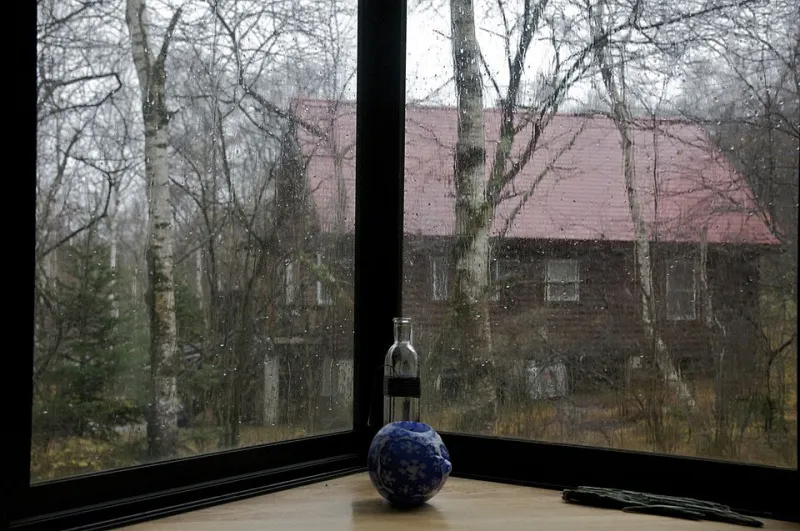
Photo: Koichi Oda, CC BY 2.0, via Wikimedia Commons
November has a particular talent for grey. Not dramatic, movie grey — more a soft, unbothered grey that settles over the roof tiles, the bus stop and the half-hearted leaf pile. It is the kind of weather that makes you want to put the kettle on and stare out of the window for a minute. Which is, conveniently, exactly what Imagine for 1 Minute is for.
This is not about fixing the weather or forcing a masterpiece. It is about using the sky as a prompt. You do not need a notebook, an app or a free afternoon. You need sixty seconds, a window and a willingness to let a small idea happen.
Here are five tiny weather reports you can try on a drizzly afternoon. Set a timer if you like. Or just count to sixty slowly and stop when the kettle clicks.
Start with the sky, not the blank page
Most creativity advice begins with a blank page. That can feel like homework. Weather is easier. It is already there, doing something. All you have to do is notice one detail and ask it a question.
The trick is to keep it small. You are not writing a novel about rain. You are writing one line, one image or one character who happens to be standing in it. A minute is enough for that. In fact, a minute is often better, because it stops you from overthinking.
1. The bus-shelter oracle
The prompt: Look at the nearest window. Imagine someone waiting at a bus shelter just outside it. They are not looking at their phone. They are looking at the weather. What do they know that you do not?
Your sixty seconds: Write one sentence of dialogue they might say to a stranger. Keep it odd but believable. Something like: ‘It always stops just before the bus comes.’ Or: ‘I only brought this umbrella to annoy the sky.’
Why it works: Weather gives strangers a reason to talk. A bus shelter is a tiny theatre. You do not need a plot — just a voice and a bit of drizzle.
2. Fog with a secret
The prompt: Fog turns familiar streets into guesswork. Imagine a foggy November morning in your town. Something has been left on a wall, a bench or a doorstep overnight. What is it, and who left it there?
Your sixty seconds: Describe the object in two lines. Do not explain it. Let the fog do the work. For example: ‘A pair of dry gloves on a wet bench. One is inside out, as if someone left in a hurry.’
Why it works: Fog hides things, and hidden things invite stories. You are not solving a mystery in a minute. You are just placing one curious object in the mist and walking away.
3. The sudden sunbreak
The prompt: November sometimes offers a sudden sunbreak — that low, bright light that makes every wet roof look briefly cinematic. Imagine the sunbreak lasts exactly one minute. Something changes in that minute. What is it?
Your sixty seconds: Write a first line for a story that begins at the exact moment the clouds part. Try to include a sound, a smell or a small physical detail. ‘The puddles went gold and the whole street smelled of wet coats.’
Why it works: A sunbreak is a natural deadline. It arrives, it leaves, and it asks you to notice what happens in between. That is a short story in miniature.
4. Puddle as a portal
The prompt: Find a puddle — real or imagined. Look at what it reflects. Now pretend the reflection is slightly wrong. The sky is the right colour, but the buildings are different. What is on the other side?
Your sixty seconds: Name one thing that exists in the reflected world but not in yours. Keep it mundane rather than magical. A second bakery. A statue of a dog. A postbox painted blue. One detail is enough.
Why it works: Portals do not have to be grand wardrobes or rabbit holes. A puddle is a low-effort doorway. You can step through it in your head and be back before the tea goes cold.
5. The weather inside
The prompt: Forget the sky for a moment. Imagine a character whose mood has its own weather forecast. Are they experiencing light drizzle, patchy fog or a sudden clear spell? What is the forecast for the next hour?
Your sixty seconds: Write a three-word weather report for a person you invent on the spot. For example: ‘Scattered pride, clearing later.’ Or: ‘Heavy nostalgia, easing by lunch.’ Do not explain it unless you want to.
Why it works: It turns an abstract feeling into something concrete and a bit funny. It also gives you a character sketch without the pressure of writing a whole character. One forecast can be the start of something.
A minute is enough
None of these prompts need to become anything. That is part of the pleasure. You can try one, smile at the result and go back to your day. Or you can keep the line in your notes and see if it grows later.
The grey November sky is not an obstacle to creativity. It is a free prop, available in most UK postcodes at short notice. Next time the drizzle starts, give it sixty seconds. You might not get a story. You might just get a slightly more interesting minute. Both count.
And if you try all five, you have spent five minutes. That is still a very small commitment for a whole handful of tiny weather reports.