Pinned Up and Full of Story: A Sixty-Second Noticeboard Safari
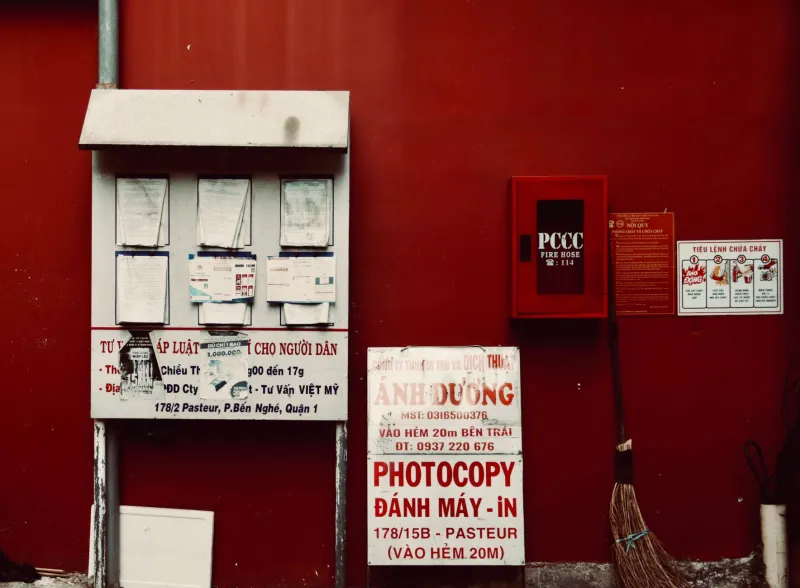
Somewhere between the parish council minutes and a faded ad for piano lessons, the UK noticeboard is quietly doing what novelists do: offering more plot than it first appears. On a wet November walk, when the pavements are shiny and the bus is late, those pinned-up scraps become a free creative writing workshop. You do not need a laptop, a prompt book or a spare hour. You need one minute and the willingness to look at the high street as a page.
The high street is already writing itself
Think about what actually gets pinned up. A lost cat. A quiz night. A yoga class in the church hall. A card reading: 'Reliable gardener, no job too small.' A tear-off tab with a mobile number and a name that might be someone's nan. These are not just notices. They are character notes, settings and plot hooks, printed on fluorescent paper and held up with drawing pins.
The trick is to treat the board like a story anthology. Do not read it for information. Read it for atmosphere. Who wrote this? Why that phone number? Why is the corner shop advertising 'fresh sandwiches and local eggs' in the same breath as 'wedding bouquets'? The gap between those two things is where a sixty-second story starts.
Three notices, three seeds
On your next wet walk, give yourself a tiny assignment: collect three notices. Not photographs, necessarily, unless you want them. Just three details you can hold in your head. One should suggest a character. One should suggest a setting. One should suggest a plot twist. Then give each one a single minute of imagination. No editing. No judging. Just follow the first interesting thought.
Notice one: the lost cat with a secret
A lost-cat poster is a masterclass in off-page drama. There is a name, usually something like Biscuit or Boris. There is a blurry photo. There is a reward, often modest. And there is a phone number with a story behind it.
Set a timer for sixty seconds. Ask: who is Biscuit's owner? Not the obvious answer. Maybe a retired bus driver who has never liked cats but inherited this one from a neighbour. Maybe a teenager who is secretly relieved the cat is gone, then feels terrible about it. Maybe the cat is not lost at all. Maybe it has simply moved three doors down because the food is better.
In one minute, you have a character, a voice and a small moral dilemma. That is enough to start a scene.
Notice two: quiz night at the village hall
Quiz-night flyers are all about setting. The hall with the sticky floor. The raffle. The woman who runs the bar and knows everyone's business. The team name that is funnier after two drinks. The prize is probably a box of biscuits.
Spend sixty seconds inside that room before the quiz begins. What can you hear? What does it smell like? Who is late, and why? Who is taking it far too seriously? Now drop in one outsider: a new resident, a visiting cousin, a person who has come to the wrong hall entirely.
You do not need a plot yet. A setting with tension is a story engine.
Notice three: the corner-shop ad with a typo
The corner-shop window is the messy cousin of the village hall board. Handwritten ads for odd jobs, missing keys, second-hand buggies and 'home-made cakes, order now'. A typo can be a gift. 'Piano lessons, all ages, gentle approach' becomes something stranger if a letter slips. 'Bed for sale, hardly used' can go in unexpected directions.
Take one ad and add a twist. The gardener with the tear-off tabs is not a gardener at all. The cake order is a coded message. The missing keys open a door that should stay shut. Give yourself sixty seconds to write the first line of the story that follows. Just one line. That is your pin in the board.
The sixty-second rule
The point is not to produce a polished piece. The point is to lower the barrier. A noticeboard asks nothing of you. It does not care if your story is good. It simply offers material, and material is the thing most of us claim we lack.
Set a timer. Read one notice. Ask one question. Write one sentence or say one sentence aloud. Stop. That is a creative workout. Do it three times on a wet walk and you have done more writing than many people manage in a week.
Pin your own
Before you head home, notice what you would pin up if you had a spare index card. A question you cannot answer? A meeting you want to happen? A tiny ad for an imaginary service? The board works both ways. It is a reader and a writer. Give it a minute, and it will give you a story seed back.