Quiz Impossible: How to Invent a Sixty-Second Pub Round From Thin Air
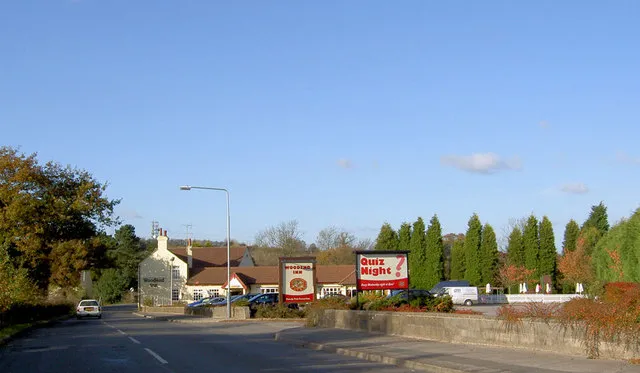
Photo: Steve F, CC BY-SA 2.0, via Wikimedia Commons
There is a particular silence at a pub table when the quizmaster announces a round nobody can revise for. It is not the silence of defeat. It is the silence of a table full of people thinking: go on then, make something up.
That is the idea behind this one-minute challenge. Instead of another round on capital cities or 1990s chart hits, build a quiz round out of pure invention. Invented UK facts. Imaginary local legends. Categories so specific they could only belong to your pub. The aim is not accuracy. The aim is a full table of laughs before the drinks go flat.
Why invented rounds work
A standard pub quiz asks what you know. An invented round asks what you can imagine together. That changes the social weather. The quiet fact-retriever at the end of the table becomes the person who invents the best fictional mayor. The mate who usually says nothing until the food arrives suddenly has a theory about the haunted roundabout. The competitive energy does not disappear. It just points somewhere more interesting.
And because the facts are invented, nobody can be wrong in a boring way. There is no 'actually, it was 1987'. There is only 'that is a brilliant answer' or 'no, the swan was the landlord'.
The rules of the impossible round
Keep it simple. Each round has five questions. The table gets sixty seconds to write down answers. Every fact must be invented on the spot by the quizmaster. One question should sound almost true. One should be absurdly specific. One should involve a local landmark. One should include a number that feels official. One should be a tie-breaker that nobody can win without laughing.
Scoring: one point for a plausible answer, two for an answer that makes the table laugh, and three for an answer that is somehow more convincing than the invented fact. The quizmaster has the final say. The quizmaster is also allowed to change the fact if someone else's answer is better.
Build your categories
The category is where the fun starts. Go too broad and you get general knowledge by another name. Go too specific and the table leans in. Try these:
- Local landmarks ranked by menace. The roundabout, the war memorial, the supermarket trolley bay, the alley behind the chippy.
- Things you have said to a pub dog. Includes 'excuse me', 'not for you' and 'I suppose you are the landlord now'.
- Crisp flavours of the future. Sea salt and regret. Roast dinner in a bag. Vinegar and existential dread.
- Council services that sound made up. The Department for Pavement Mysteries. The Office for Bin Day Coordination. The Bureau of Unclaimed Umbrellas.
- Reasons the pub clock is wrong. None of them are technical.
A sample round: The Red Lion, Fictional Lane
- In 2026, what did the imaginary parish council rename the village green? Answer: The Green of Moderate Concern.
- Which local landmark is said to be haunted by a man still waiting for a bus that was cancelled in the 1970s? Answer: the shelter outside the chemist.
- What is the official unit of measurement for a pub garden hedge? Answer: one 'loose pint'.
- How many traffic cones does it take to make a roundabout official? Answer: three, provided one is wearing a hi-vis vest.
- Tie-breaker: describe the pub's imaginary award-winning ale in exactly five words. Answer: 'It tastes like a Tuesday.'
You can see the shape of it. The questions do not need to be clever in isolation. They need to open a door. The table does the rest.
Hosting tips for sixty-second chaos
Read the question once, clearly, then start the timer. Do not explain the joke before the answer sheet goes down. Keep the pen moving. If a table asks whether a fact is true, say 'all facts are true in this round' and move on. That sentence does a lot of work.
Have a visible timer. A phone is fine, but a dramatic countdown from ten adds a certain ITV energy. Do not let the round run long. Sixty seconds is the point. It creates a small, shared panic that makes the answers stranger and the laughter quicker.
It also helps to have a prize that is not worth winning. A bag of crisps, a damp beermat, the title of Fictional Local Historian for a week. The less useful the prize, the more the table commits.
The point is not the points
A pub quiz is usually a test with beer. This version is a game with beer and a licence to invent. It works because it gives everyone a role. The confident one hosts. The quiet one writes. The chaotic one suggests a swan. The person who claims not to be competitive starts arguing about the scoring system within four minutes.
And because the round is invented, it belongs to the table. It is not a product downloaded from a quiz website. It is a small piece of local folklore created between the starter and the main. That is the sort of creativity that fits into a minute: low stakes, high silliness, and a room full of people pretending to know something they have just made up.
So next time your local advertises a quiz, consider adding one impossible round. Invent five facts. Set a timer. Let the table argue. Then write down the best answer on a beermat and keep it. You have just made a tiny piece of pub history.
That is the Imagine for 1 Minute approach: one minute, one table, one round that never existed. The laughs are real, even if the facts are not.